Is your washing machine full of water after the cycle? A washer that won't drain is a common household problem, and in many cases you can find the cause without immediately calling a technician.
The problem may be something simple such as a clogged drain hose, blocked filter, or overloaded drum. However, a damaged drain pump or electrical problem can also prevent the washer from removing water.
Why Is My Washing Machine Not Draining?
Several different problems can cause a washing machine to stop draining. The most common causes include:
- Clogged drain hose
- Blocked drain filter
- Foreign object stuck in the drain pump
- Drain pump failure
- Blocked household drain
- Excessive laundry in the drum
- Kinked or crushed drain hose
- Door or lid safety problem
- Incorrect drain hose installation
- Electrical or control-board failure
1. Check the Drain Hose
The drain hose is one of the first things you should inspect. A hose that is kinked, crushed, or blocked can prevent wastewater from leaving the washer.

Turn off and unplug the washer. Carefully inspect the entire hose from the back of the machine to the household drain. Straighten any sharp bends and check for visible blockage.
2. Clean the Drain Filter
Many front-loading washing machines have a drain filter near the bottom front of the appliance. Coins, lint, hair, buttons, and other small objects can collect inside this filter.

Place towels and a shallow container underneath the filter area because trapped water may come out when the filter is opened.
Remove the filter according to your washer's instructions, clean it thoroughly, and reinstall it securely.
3. Look for Objects Blocking the Pump
Small objects can sometimes travel beyond the filter and reach the drain pump. Common examples include coins, socks, hair clips, and small pieces of clothing.

If you hear a humming noise when the washer attempts to drain but little or no water comes out, a blocked pump is one possibility.
4. Check the Household Drain
Sometimes the washing machine is working correctly but the household drain itself is blocked.
Check whether water drains normally from nearby sinks or other fixtures. If several drains are slow or backing up, the problem may be inside the home's plumbing rather than the washing machine.
5. Make Sure the Washer Is Not Overloaded
An overloaded drum can interfere with proper washing and draining. Large blankets, towels, and heavy clothing can become tightly packed and may prevent the machine from completing the cycle correctly.
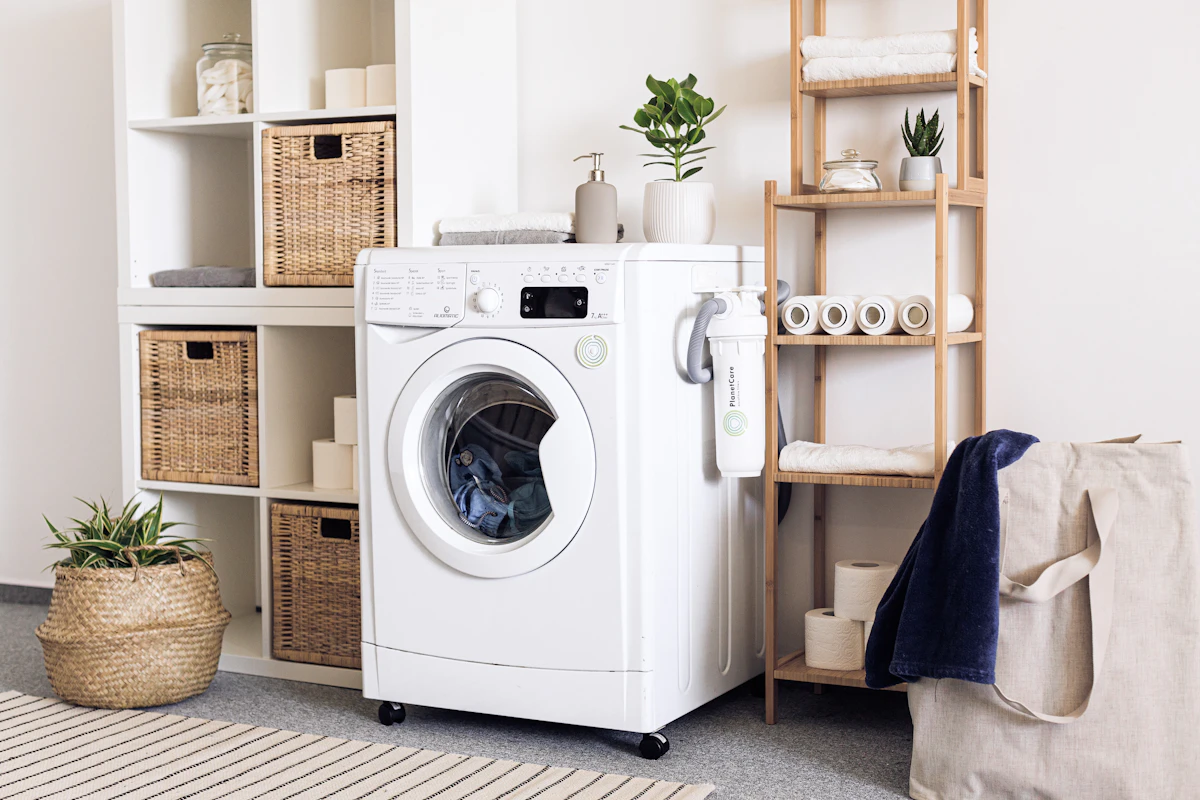
Remove some items and run a drain or spin cycle again. If the washer drains normally after reducing the load, excessive loading may have contributed to the problem.
6. Check the Drain Pump
The drain pump removes wastewater from the washing machine. If the pump motor has failed, the washer may leave water inside the drum even when the hose and filter are clear.
Possible signs of a pump problem include:
- The washer makes an unusual humming sound.
- The machine tries to drain but water remains inside.
- The pump makes grinding or rattling noises.
- The washer repeatedly stops during the drain cycle.
A failed pump generally requires replacement. Because accessing the pump can involve electrical and mechanical components, professional repair is recommended if you are not experienced with appliance repair.
7. Check for a Kinked Hose
Even when the drain hose is not completely blocked, a sharp bend can significantly reduce water flow.
Pull the washer forward carefully and inspect the hose. It should have a smooth path without severe bends or crushing.
8. Restart the Washing Machine
After checking the basic causes, unplug the appliance for several minutes and reconnect it. Some washers can temporarily stop because of a control error.
Run a short drain or spin program and observe what happens.
If the machine still refuses to drain, continue troubleshooting rather than repeatedly restarting it.
9. Check the Washer's Error Code
Modern washing machines often display an error code when they detect a drainage problem. The exact code depends on the manufacturer and model.
Write down the code and check the owner's manual for its meaning. This can save considerable time when diagnosing the problem.
10. When Should You Call a Technician?
You should consider professional help when the simple checks do not solve the problem or when the appliance requires electrical or internal mechanical work.
Call a qualified technician if:
- The drain pump appears damaged.
- The machine trips the electrical breaker.
- You smell burning or see damaged wiring.
- The washer leaks from inside the cabinet.
- The control board may be faulty.
- The machine makes loud mechanical noises.
Quick Troubleshooting Checklist
| Problem | What to Check |
|---|---|
| Water remains in drum | Filter, hose and drain pump |
| Hose not draining | Kinks or blockage |
| Pump humming | Possible blockage or pump problem |
| Several drains backing up | Household plumbing blockage |
Related FixNest Home Guides
If you are troubleshooting other household appliances, you may also find these FixNest guides useful:
- Refrigerator Not Cooling: Causes and Fixes
- Refrigerator Running But Not Cooling
- Refrigerator Ice Maker Not Making Ice
Frequently Asked Questions
Why is my washing machine full of water?
A clogged drain filter, blocked drain hose, blocked pump, overloaded drum, or failed drain pump can cause water to remain inside the washing machine.
Can I fix a washing machine that won't drain myself?
Yes. Basic checks such as inspecting the drain hose, cleaning the filter, and checking for obvious blockages can often be performed safely after unplugging the appliance.
How do I know if the drain pump is bad?
A washer that hums during draining but leaves water inside may have a blocked or defective drain pump. Further testing may be required to confirm pump failure.
Should I keep running the washer if it won't drain?
No. Repeatedly running a washer that cannot drain can cause additional problems. Unplug it and identify the cause before running another cycle.
Final Thoughts
A washing machine that won't drain does not always mean you need an expensive repair. Start with the simplest possibilities: inspect the drain hose, clean the filter, check for blockage, and make sure the household drain is working properly.
If those checks do not solve the problem, the drain pump, wiring, or control system may need professional attention.